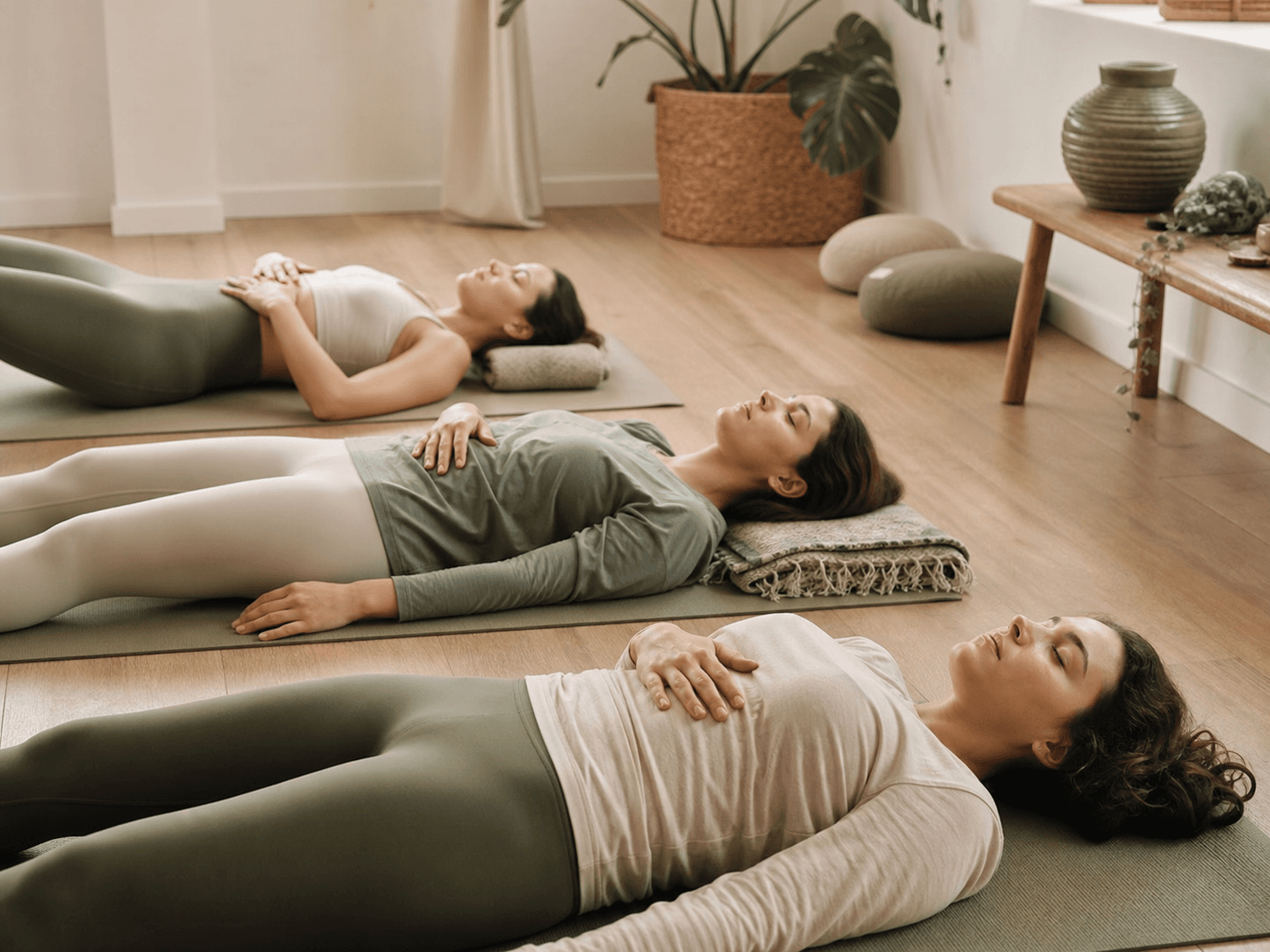
Diaphragmatic Breathing: How to Breathe Lower Without Forcing
Most people have been told to "take a deep breath."
It sounds simple.
But when stress is high, that advice can become strangely unhelpful.
People often respond by pulling in a huge breath, lifting the shoulders, expanding the chest, tightening the throat, and trying to force calm into the body like they are inflating a camping mattress with emotional urgency.
That is not what we are doing here.
Diaphragmatic breathing is not about taking the biggest breath possible.
It is not about pushing the belly out.
It is not about performing relaxation correctly.
It is about learning to breathe lower, softer, and with more awareness.
The goal is not to control the breath.
The goal is to build a better relationship with it.
What Is Diaphragmatic Breathing?
Diaphragmatic breathing is a breathing practice that brings attention to the diaphragm, the major breathing muscle located below the lungs. When the diaphragm moves well, the breath can feel lower, wider, and less tense than shallow upper-chest breathing.
You may also hear this called:
- belly breathing
- abdominal breathing
- lower breathing
- deep breathing
- diaphragmatic breathing
These names are useful, but they can also be misleading.
"Belly breathing" does not mean the belly is the only place that should move.
A good breath can move the belly, lower ribs, sides, back, and chest in a natural way.
The belly is not the boss.
It is feedback.
Think of diaphragmatic breathing as an invitation for the breath to move lower and wider without strain.
Why the Diaphragm Matters
The diaphragm sits below the lungs and plays a central role in breathing. Cleveland Clinic describes diaphragmatic breathing as a technique that helps people use the diaphragm more consciously and fill the lungs more efficiently.
When breathing is tense, many people breathe mostly into the upper chest.
The shoulders may lift. The neck may tighten. The breath may feel short. The chest may feel busy. The belly may feel guarded.
This can happen during stress, pain, fear, long screen use, poor posture, emotional tension, or simply habit.
Diaphragmatic breathing gently asks the body:
Can the breath move lower? Can the ribs expand a little? Can the belly soften? Can the exhale become easier? Can the body receive breath instead of grabbing it?
That shift can feel small at first.
Small is fine.
Breathwork does not need to arrive wearing a cape.
The Most Important Principle: Do Not Force It
This whole article could almost be one sentence:
Let the breath move lower only as far as is comfortable.
NHS guidance for breathing exercises for stress says to let the breath flow as deep down into the belly as is comfortable, without forcing it.
That phrase matters.
Without forcing.
If you try too hard, diaphragmatic breathing can become another stressor.
You may start judging the breath.
Is my belly moving enough? Is my chest too high? Am I doing this wrong? Why am I not calm yet? Should my diaphragm be sending me a certificate?
No.
The practice is not about perfect mechanics.
It is about softer contact with the breathing body.
Belly Breathing Is Not Belly Pushing
This is one of the most common mistakes.
People hear "belly breathing" and start pushing the belly outward on the inhale.
That can create tension.
The belly does not need to be shoved forward.
It should be allowed to respond.
A better cue is:
Let the belly receive the breath.
Or:
Let the lower ribs widen gently.
Or:
Let the body make room.
During a natural diaphragmatic inhale, the belly may rise slightly as the diaphragm descends and the abdominal contents shift. But that movement should feel like a response, not a performance.
The belly is not a balloon you need to aggressively inflate.
Please do not turn your abdomen into a competitive sport.
Chest Breathing Is Not Bad
Another common mistake is thinking chest breathing is wrong.
It is not.
The chest is supposed to move when you breathe.
The ribs are supposed to move.
The upper body is allowed to participate.
The issue is not that the chest moves.
The issue is when breathing becomes stuck mostly in the upper chest, with tension in the shoulders, neck, and throat, and very little movement lower down.
So instead of thinking:
"I must stop chest breathing."
Think:
"Can I include more of the lower body in the breath?"
That is a kinder and more accurate approach.
How to Practice Diaphragmatic Breathing
Start lying down if possible.
Lying down makes it easier to relax effort and feel movement.
You can practice sitting later.
Step 1: Get Supported
Lie on your back with your knees bent.
Support your head if needed.
You may place a pillow under your knees.
Let the body feel held by the floor, bed, or mat.
If lying down is uncomfortable, sit in a chair with both feet on the floor.
Step 2: Place the Hands
Place one hand on your upper chest.
Place the other hand on your belly or just below your rib cage.
This hand placement is commonly used in diaphragmatic breathing instructions because it helps you feel whether the breath is moving more in the upper chest or lower body.
Do not use the hands to judge yourself.
Use them to listen.
Step 3: Notice First
Before changing anything, notice your natural breath.
Where does it move?
Chest? Belly? Ribs? Back? Throat? Shoulders?
Is the breath fast or slow? Smooth or uneven? Comfortable or restricted?
This is information.
Not a problem.
Step 4: Inhale Softly Through the Nose
Let the inhale come through the nose if that is comfortable.
Allow the lower hand to rise slightly if it wants to.
Let the ribs widen gently.
Let the belly soften.
If your nose is blocked or nasal breathing is uncomfortable, breathe in a way that feels safe and easy.
The practice should adapt to the person, not the other way around.
Step 5: Exhale Slowly and Gently
Let the exhale leave slowly.
You can exhale through the nose or through softly pursed lips.
The American Lung Association teaches belly breathing with a slow inhale through the nose and a slow, gentle exhale through pursed lips, especially in the context of COPD breathing support.
For general stress practice, keep it easy.
No hard blowing.
No dramatic emptying.
Just a smooth release.
Step 6: Repeat for 3 to 5 Minutes
Continue gently.
Inhale softly.
Exhale slowly.
Let the lower ribs, belly, and back have permission to move.
If the breath gets uncomfortable, return to normal breathing.
The practice is not measured by how much air you take in.
It is measured by whether the body feels safer, softer, or more present.
A 5-Minute WholeRoot Practice
Use this simple version as your first diaphragmatic breathing practice.
Minute 1: Listen
Lie down or sit comfortably.
Place one hand on the chest and one hand on the belly or lower ribs.
Do not change anything yet.
Just notice.
Say quietly:
"This is how my body is breathing right now."
Minute 2: Soften
Relax the jaw.
Let the tongue rest.
Let the shoulders drop slightly.
Let the belly be less guarded.
Do not force deep breathing.
Just remove a little effort.
Minute 3: Invite Lower Movement
Inhale gently through the nose if comfortable.
Let the lower hand receive a little movement.
Let the ribs widen.
Let the belly soften.
If there is only a little movement, stay patient.
You are not failing.
You are introducing the body to a new doorway.
Minute 4: Slow the Exhale
Now let the exhale become a little longer than the inhale.
Try:
Inhale gently. Exhale slowly.
If counting helps:
Inhale for 3. Exhale for 5.
If counting creates pressure, drop it.
The breath is not a math exam.
Minute 5: Return to Natural Breath
Stop shaping the breath.
Let it return to its own rhythm.
Notice what changed.
Maybe the breath feels lower.
Maybe the body feels calmer.
Maybe you simply noticed tension you had not noticed before.
All of that counts.
Awareness is part of the practice.
Sitting Version
Once lying down feels familiar, try sitting.
Sit upright but not stiff.
Both feet on the floor.
Hands on belly and chest.
Relax the shoulders.
Inhale gently.
Let the lower ribs and belly move.
Exhale slowly.
Keep the face soft.
If sitting makes it harder, that is normal.
Posture, tight clothing, stress, and habit can all change how the breath feels.
Do not fight it.
Go back to lying down when needed.
Standing Version
Standing diaphragmatic breathing is useful because it brings the practice into real life.
Stand with feet hip-width apart.
Unlock the knees.
Let the shoulders soften.
Place one hand on the belly or lower ribs.
Breathe gently.
Feel the feet and the breath at the same time.
This is good before conversations, work, training, walking, teaching, parenting, or any moment where you need to return to yourself without lying down like a dramatic Victorian poet.
Common Mistakes
Mistake 1: Trying to Take Huge Breaths
Bigger is not always better.
A huge inhale can create tension, dizziness, or more stress.
Go smaller.
Mistake 2: Pushing the Belly Out
Let the belly move.
Do not shove it forward.
The belly responds to breath; it does not need to audition for the role.
Mistake 3: Freezing the Chest
The chest can move.
The goal is not zero chest movement.
The goal is more balanced breathing.
Mistake 4: Holding the Breath
For this beginner practice, do not add long holds.
Breath holds belong in other methods and are not necessary here.
Mistake 5: Judging Every Breath
If you are constantly asking, "Am I doing this right?" the practice becomes mental tension.
Return to feeling.
Less analysis.
More contact.
Mistake 6: Practicing Only When Stressed
Practice when you are okay.
That way, when stress rises, the body already knows the path.
What Should It Feel Like?
Diaphragmatic breathing may feel like:
- the belly rising slightly
- the lower ribs widening
- the back expanding gently
- the shoulders softening
- the exhale becoming easier
- the breath slowing down
- warmth or heaviness
- more body awareness
- less urgency
But it may also feel unfamiliar.
Some people feel awkward at first.
Some feel emotional.
Some feel tightness.
Some feel almost nothing.
That is okay.
The first goal is not a perfect relaxed state.
The first goal is awareness without force.
What If It Feels Hard?
If diaphragmatic breathing feels difficult, try these adjustments.
Make the Breath Smaller
Do not chase depth.
Let the breath be softer.
Try Lying Down
The body often learns more easily when supported.
Place Hands on the Lower Ribs
Some people connect better with rib movement than belly movement.
Exhale Through Pursed Lips
A slow pursed-lip exhale may help some people feel control and ease, and it is commonly taught in respiratory support settings.
Stop Counting
Counting helps some people.
It stresses others.
Use what helps.
Drop what does not.
Practice for Less Time
Start with one minute.
A tiny root is still a root.
Safety Notes
Diaphragmatic breathing is gentle for many people, but breath practices can still feel uncomfortable for some.
Go slowly or ask a qualified professional for guidance if you:
- have asthma, COPD, or another respiratory condition
- have chest pain or unexplained shortness of breath
- have panic attacks triggered by body sensations
- are pregnant
- have recent surgery
- have significant trauma history
- feel faint, dizzy, or unsafe during breathing exercises
A Cochrane review on breathing exercises for adults with asthma found that breathing exercises may improve some outcomes such as quality of life and hyperventilation symptoms, but they should not be treated as a cure or replacement for medical care.
Stop immediately if you feel chest pain, faintness, severe shortness of breath, confusion, panic escalation, or anything that feels unsafe.
Breathwork should support the body.
Not bully it.
Diaphragmatic Breathing for Stress
For stress, use the softest version.
Lie down or sit.
Place hands on chest and belly.
Inhale gently.
Exhale slowly.
Let the exhale be slightly longer.
Practice for five minutes.
NHS breathing guidance for stress recommends gentle breathing, letting the breath go only as deep as is comfortable, and repeating the practice for around five minutes.
That is enough.
Do not add intensity.
Stress does not need a breathing technique with fireworks.
It needs a steady signal.
Diaphragmatic Breathing Before Sleep
Before sleep, make the practice even softer.
No strong inhale.
No long holds.
No intense counting.
Try this:
Lie on your back or side.
Place one hand on the belly.
Inhale gently.
Exhale slowly.
On the exhale, silently say:
"Let go."
Or:
"Not now."
Or:
"Enough."
Let the breath become boring.
Boring is underrated.
Boring is often where sleep enters quietly through the side door.
Diaphragmatic Breathing at Work
You do not need to lie on the office floor unless your workplace is extremely open-minded.
Try this instead.
Sit with both feet on the floor.
Place one hand low on the belly or ribs.
Look away from the screen.
Take five soft breaths.
Let each exhale be slower.
Then ask:
"What is the next real task?"
This turns diaphragmatic breathing into a workday reset.
Not a productivity hack.
A nervous-system handshake.
Diaphragmatic Breathing and Grounding
This practice pairs beautifully with grounding.
Try:
Feet on the floor. One hand on belly. One hand on chest. Inhale softly. Exhale slowly. Feel the body supported. Name one thing you can see. Name one thing you can hear. Return.
Breath plus contact is powerful because it gives the mind two anchors:
The breath inside. The ground outside.
That is a strong way back.
How Often Should You Practice?
Start with five minutes a day.
Or one minute, three times a day.
Try linking it to an existing routine:
- before checking your phone
- after brushing your teeth
- before opening your laptop
- after lunch
- before sleep
- before a difficult conversation
- after coming home
Keep it small enough to repeat.
A practice that actually happens is better than a perfect routine that lives only in your imagination wearing linen pants.
The WholeRoot Reminder
Diaphragmatic breathing is not about mastering the breath.
It is about meeting it.
The breath has been with you through every version of your life.
Every hard day. Every beginning. Every mistake. Every repair. Every quiet moment. Every return.
You do not need to force it into wisdom.
You can listen.
You can soften.
You can invite.
You can begin again.
That is the practice.
Try It Now
Place one hand on your chest.
Place one hand on your belly or lower ribs.
Notice your natural breath.
Relax your jaw.
Inhale gently.
Exhale slowly.
Let the lower body receive the breath.
Do this five times.
No force.
No performance.
No need to become a professional monk before dinner.
Just one softer breath.
Then another.
That is enough to begin.
Keep Exploring
New to breathwork? Start with Breathwork Hub: Start Here.
Not sure what to choose next? Use The Breathwork Map: Calm, Balance, Energy and Deep Work.
Before trying intense methods, read Breathwork Safety: When to Go Slow or Skip It.
Want a simple practice for stressful moments? Try Breathing for Stress: A Gentle 5-Minute Reset.
If breath focus feels like too much today, try Grounding for Stress: A 5-Minute Nervous System Reset.